Follow by Email

Video Bar

Loading...

Monday, February 21, 2011

PTSD Memories can be Neutralized

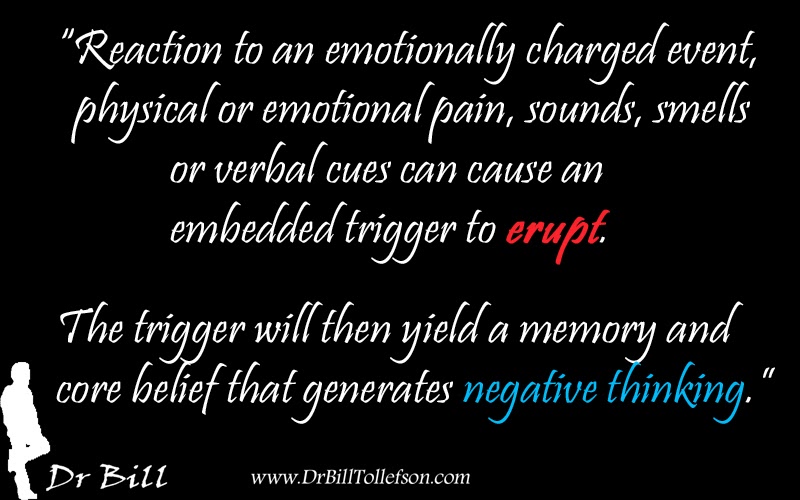
Why do negative thoughts enter my mind? Well there are two routes that need to be considered. Negative thoughts are generally triggered unconsciously in course of our daily lives and can be side effects of PTSD symptoms. To deal on a daily basis, you first have to understand the elements of memory and what gets attached to them. Memory has three compartments: content, emotion and audio. A core belief attaches to the memory on the side, as if that was not enough, because the memory content is from a traumatic event. Over time the core belief roots itself to the memory. Meaning the rooted belief will surface along with the other compartments when the memory is triggered. That being said, let’s look at how negative thoughts are routed into our consciousness.
Route #1 is when negative thoughts surface as the result of a current event stimulating a memory of a previous event to release a root belief from that event For example: a rooted belief could be “I am not good enough”. The other route is when the current event stimulates the audio portion of the memory and releases the direct statement recorded in the brain, like “You will never be any good at anything”. Understand that both routes of delivery are disempowering. You have no idea where they came from. Both influence you by running in the background but cause you to think negative ways and as a result you think you are crazy because there is nothing happening now, you think is causing you trouble.
The positive thing is once you understand the reasons you are thinking negatively today, you won’t feel like you are crazy. Also it is possible to make a shift from negative to positive as well as neutralizing the influence the thoughts have on you, so the thoughts no longer disempower you. Transformation can occur quickly. Check out the possibilities at http://www.lifeskills-transformation.com/enhanced_rrt.html

Follow Me through Twitter

Hey everyone!!!!!

Guess what? I just signed up for Twitter. If you would like to follow me or tweet me, my username is @DrBillLifeCoach

I am real excited about this. Life Coaching is so powerful and can help everyone achieve their full potential. To learn more by going to my new coaching website http://www.lifeskills-transformation.com/index.html

Friday, February 4, 2011

Secondary Post-Traumatic Stress Disorder

In this modern age of technology, we are faced with images from around the world in real time. The events in Egypt, Chilean Mine Accident, Iraq War, Afghanistan War and 9/11 are streamed to our living rooms. Subconsciously we are being deeply affected. We are feeling strong emotions and thinking “why am I feelings this when I am not involved and watching them happen?”
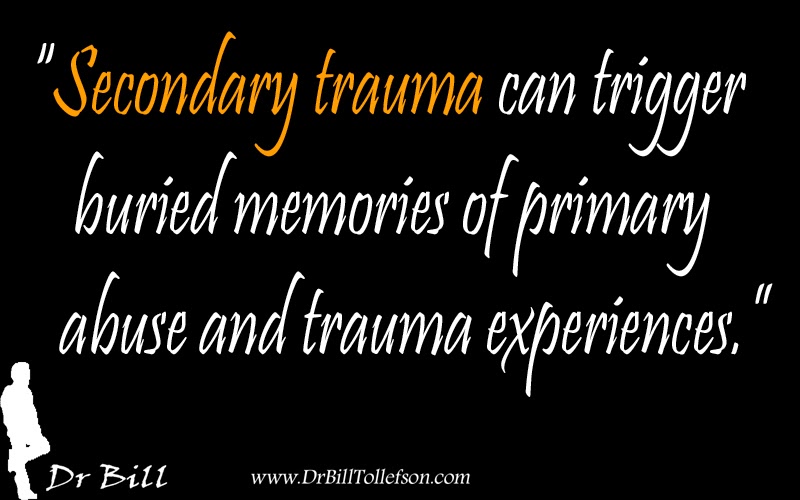
If we have personally experienced an abusive or traumatic life event in childhood and it has been buried, a present event being viewed live over TV can cause images from the past to surface and affect your perceptions, emotions, thoughts and behaviors. So it is important that we learn about Secondary Post-traumatic Stress (PTS).
Experiencing Post-traumatic Stress is a normal response to an overwhelming painful emotional experience. There are two types of Post-traumatic Stress. One type is Primary PTS where you are traumatized by an act that happens directly to you. The second type is secondary PTS where you are traumatized by witnessing the traumatic act that happens to other people. The symptoms resulting from secondary exposure to trauma are no different from primary PTS. These symptoms could be affecting us on a subconscious level and could cause our life to be dysfunctional.

The symptoms that might be felt from constant secondary exposure to terrorizing images maybe anxiety, fear and uncertainty, dissociative reactions, feeling of emptiness, feeling of loss, detachment from our lives, hyper vigilance (heightened awareness), a need to isolate and depressed mood. Sleeping patterns and eating may also be affected. If any of these symptoms already exist in you, they may very well be increased disproportionately by secondary exposure to “traumatic images”. It is important to know that what you are experiencing is a normal reaction. Understand that for every action (witnessing a traumatic event) there is an equal and opposite reaction (aftereffects). These aforementioned symptoms are the equal and opposite reaction.

Another factor that may occur as a result of the secondary exposure is that witnessing current traumatic on others may trigger past buried memories of primary traumatic exposure that have remained inactive deep within us without us being conscious of it. If you are experiencing some or all of the symptoms listed above, then it might be the result of too much exposure to the media and causing past recollections to surface.
It becomes so important for your physical and emotional health to recognize that what you are feeling is normal. Give yourself permission to experience your strong sympathetic feelings for what others are going through. So here are a few suggestions that may help reduce the affects of secondary exposure.
1. Reduce exposure to the media.
2. Recognize that what is happening is not happening to you right now.
3. Resume normal activities.
4. Monitor your emotional reactions.
5. Nurture yourself. (Do not judge your emotions)
6. Give yourself permission to go through the grief. Witnessing loss cause grief reactions for others.
7. Talk to other people about your feelings and reactions to these ghastly events as a way to appropriately vent.